Pomeranian Grooming: Care Beneath the Fluffy Coat
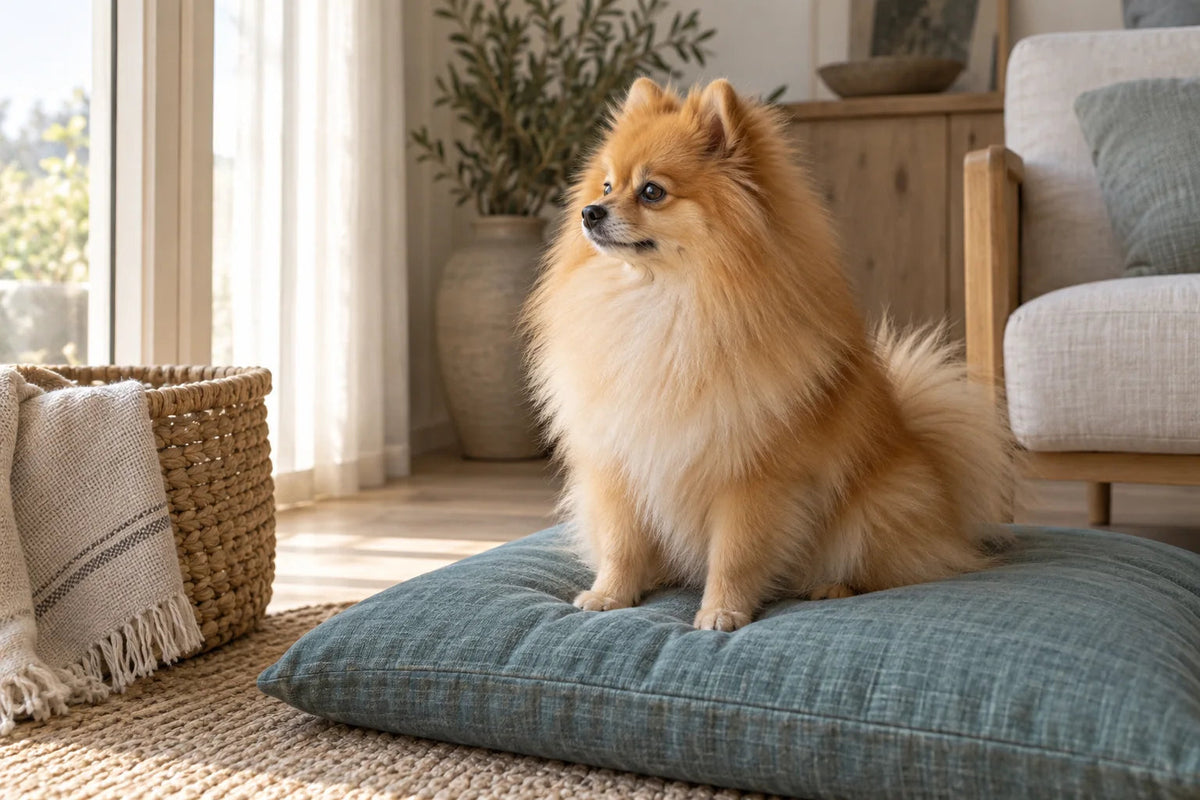
A Pomeranian can look perfectly fluffy while small tangles remain hidden at the roots. Brushing only the outside makes the outline prettier without necessarily making the coat more comfortable. The useful skill is learning to part that cloud of hair and check what is underneath.
Preserve the natural double coat. A dramatic short teddy-style haircut is not a substitute for careful maintenance, and routine body shaving is not the starting point for this breed.
Fluffy is not the same as tangle-free. Work in small sections, check friction areas and dry through the roots. Keep the natural coat while making care manageable.
Look beneath the ruff
The AKC Pomeranian profile describes a profuse double coat requiring frequent brushing through its depth. The longer outer hair and dense softer layer beneath need attention together.
Part a small area at the shoulder to see how much coat sits between the surface and skin. Then check behind the ears, beneath the collar or harness and inside the legs. These small areas can become troublesome before the body looks untidy.
Coats vary in density and change as young dogs mature. Ask a groomer to show you an appropriate routine for the present coat instead of assuming that a puppy brush and technique will always be enough.
Use a section-and-check method
- Settle the dog on a secure non-slip surface.
- Part a small section of hair rather than pressing a brush into the whole coat.
- Brush gently with a suitable tool, keeping the skin comfortable.
- Check the section with wider comb teeth where they pass freely.
- Move to the next small area and repeat.
- Finish with the friction points that are easy to miss.
The VUNRO coarse-and-fine comb is useful for checking small areas after brushing. Finer teeth are for clear hair, not for forcing through a dense snag.
If the comb stops, look at the cause. A loose tangle may be manageable with patient gentle work; a tight mat against the skin requires help. Do not slide scissors beneath it or keep pulling until the dog gives up resisting.
Short sessions are often easier for a small dog than one long weekly event. A quick daily look at the ears, harness areas and rear can tell you where the next careful session is needed.
Why the routine does not start with a shave
The AKC's coat-shaving guidance explains why removing a double coat is not an ordinary solution for heat or shedding and why regrowth can be unpredictable.
That does not mean leaving a dog in painful mats to preserve a look. A groomer may need to make an individual welfare decision about a neglected area. It means preventing that situation with realistic maintenance rather than routinely choosing a very short body clip.
When booking, ask for a natural-coat groom and discuss any modest foot or sanitary tidy separately. Show the groomer the areas you struggle with so the advice addresses the cause.
Drying matters as much as washing
Check the coat before bathing and get help with tight mats first. Use a secure non-slip setup, comfortable water and dog shampoo according to its directions. Keep direct spray away from the face and ear openings.
Rinse through the ruff, chest, belly and rear rather than only over the outer hair. Press water out with towels. Avoid vigorous rubbing that turns loose sections into new tangles.
If using a dog dryer, introduce the sound gently, keep airflow comfortable and moving, and supervise throughout. A small dog must not be left unattended to dry in a hot enclosure.
Part the coat at several points before deciding it is dry. A full-looking surface can conceal damp roots. Once dry, gently recheck the coat with your brush and comb.
Blue Cross's bathing guidance supports adapting the schedule to the coat and lifestyle. Cleaning a dirty foot or rear feathering locally may be enough between full grooms.
Keep small feet accessible
Check nails regularly; a full coat can hide them. Include dewclaws and ask a groomer to show you the correct length and safe cutting margin. Do not pull a leg sideways to get a better view.
The VUNRO nail grinder can smooth tiny amounts gradually if the dog is comfortable with it. Keep all long hair clear of the rotating head, use brief contacts and stay away from the sensitive quick.
Have a groomer demonstrate any necessary pad tidy. Do not cut blindly through hair when you cannot see the pad and skin beneath it.
Comfort is the final check
Stop if grooming becomes painful, the skin looks damaged or the dog repeatedly resists a particular area. Persistent irritation or unusual coat loss needs veterinary assessment, not a more forceful brush.
The result to aim for is a natural, dry coat that separates comfortably, with clear friction areas and maintained feet. The beautiful outline follows from that work.
Keep learning
More from the Blade Blog
Whippet Grooming: Gentle Coat Care and Comfortable Nails
Read the guide →
Chihuahua Grooming: Smooth Coats, Long Coats and Tiny Paws
Read the guide →